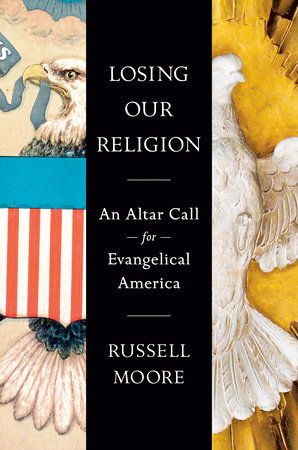
This article will run in today’s Baptist Press, the news service of the Southern Baptist Convention. It’s an excerpt from my forthcoming book, Adopted for Life: The Priority of Adoption for Christian Families and Churches (Crossway).
When my wife Maria and I at long last received the call that the legal process was over, and we returned to Russia to pick up our new sons, we found that their transition from orphanage to family was more difficult than we had supposed. We dressed the boys in outfits our parents had bought for them. We nodded our thanks to the orphanage personnel and walked out into the sunlight, to the terror of the two boys.
They’d never seen the sun, and they’d never felt the wind. They had never heard the sound of a car door slamming or had the sensation of being carried along at 100 miles an hour down a road. I noticed that they were shaking, and reaching back to the orphanage in the distance.
I whispered to Sergei, now Timothy, “That place is a pit! If only you knew what’s waiting for you: a home with a Mommy and a Daddy who love you, grandparents and great-grandparents and cousins and playmates and McDonald’s Happy Meals!”
But all they knew was the orphanage. It was squalid, but they had no other reference point. It was home.
We knew the boys had acclimated to our home, that they trusted us, when they stopped hiding food in their high-chairs. They knew there would be another meal coming, and they wouldn’t have to fight for the scraps. This was the new normal.
They are now thoroughly Americanized, perhaps too much so, able to recognize the sound of a microwave ding from forty yards away. I still remember, though, those little hands reaching for the orphanage. And I see myself there.
The doctrine of adoption doesn’t simply tell us who we are. It is a legal entitlement, one we are prone to forget. “If children, then heirs-heirs of God and fellow heirs with Christ,” the Spirit tells us (Rom 8:17).
I don’t know about you, but “inheritance” was something I, growing up in my working class world, never imagined would apply to me. An “inheritance” was something rich people left for their kids-for the spoiled trust-fund heirs who might speed around Malibu in their sports cars. It’s hard for us to imagine the place of inheritance in the world in which our Bible was first revealed.
In the world of the Bible, one’s identity and one’s vocation were all bound up in who one’s father was. Men were called “son of” all of their lives (for instance, the “sons of Zebedee” or “Joshua, son of Nun”). There were no guidance counselors in ancient Canaan or first-century Capernaum, helping “teenagers” determine what they wanted “to be” when they “grew up.” A young man watched his father, learned from him, and followed in his vocational steps. This is why the “sons of Zebedee” were right there with their father, when Jesus found them, “in their boat mending their nets” (Mark 1:19-20). When your father died, the vocation belonged to you, to pass on to your son.
This inheritance structure is a picture of something deeper, more real. The Bible identifies Jesus as the One who inherits the promises made to Abraham, Isaac, and Israel. He is the One of whom it is said, “You are my Son” (Psalm 2:7), who is given “the nations as your heritage, and the ends of the earth as your possession” (Psalm 2:8).
The Bible speaks, paradoxically, of our adoption in Christ as a past event, but also as a future one. “We wait eagerly for adoption as sons,” Paul writes, and he tells us what that looks like: “the redemption of our bodies” (Rom 8:23).
We legally belong to our Father. But, as long as our bodies are dying-as long as the universe is heaving in pain around us-it sure looks like we’re orphans still. We know that we’re children by faith, not yet by sight.
This is why “suffering” is so important. It isn’t some self-flagellation, as though someone in a monastery in the Sahara is necessarily any holier than someone who’s not. All believers in Christ, the Scripture teaches, will suffer-all of us. You will be glorified, Paul says, if you suffer with him. The problem with too many of us is not that we don’t suffer, but that we assume that only Third World Christians or heroic missionaries are suffering. My boys didn’t know that they were suffering in Russia; they would feel it as suffering now.
We get too comfortable with this orphanage universe, though. We sit in our pews, or behind our pulpits, knowing that our children watch “Christian” cartoons instead of slash films. We vote for the right candidates and know all the right “worldview” talking points. And we’re content with the world we know, just adjusted a little for our identity as Christians. That’s precisely why so many of us are so atrophied in our prayers, why our prayers rarely reach the level of “groanings too deep for words” (Rom 8:26). We are too numbed to be as frustrated as the Spirit is with the way things are.
“I know you think this terrestrial orphanage is home,” our Father speaks through prophets and apostles and consciences and imaginations, “but it’s a pit compared to home.” Or, as the Spirit says through the Apostle Paul’s adoption teaching: “For I consider that the sufferings of this present time are not worth comparing with the glory that is to be revealed to us” (Rom 8:18).
I want to see that orphanage one more time. When the boys are a little older, maybe twelve or fourteen, I plan to make the trip again, with them. I want them to see, to feel, where they came from. It’s hard to imagine now what they’ll think of it. They’ll probably hate Russian food as much as I do-and look forward to slipping off with me to the McDonald’s in Moscow when we can find it.
At the orphanage, I’m sure their eyes will widen as we walk up those cracking steps into that horror movie-looking front door. They’ll probably go limp inside, just like I did, when they see all those abandoned toddlers peering out from the corners of the doors inside. Maybe they’ll try to replay in their minds the circumstances of the nights they were born. I’m not sure what all they’ll think of the orphanage.
But I’m quite sure they won’t call it home.